@heatherspeakandsign

@heatherspeakandsign

Thursday, February 13, 2025

Valentine’s Barrier Activity


This is a great and challenging activity for upper elementary students and even middle school students as well.  I give each student a blank grid as pictured above.  I also give each student (group of 2) a completed grid, each having a different version.  I put a barrier between them like a board game box.  They are then given the task of giving each other specific and clear instructions so that their partner's picture will match their completed picture in the end.  This activity can be an auditory skill/listening activity by simply adding the acoustic hoop.  This is a great activity for working on left/right/center and top/middle/bottom.  The details of the finished grids requires very specific language, using words like outline, wavy, diagonal/horizontal/vertical, as well as size and location words.  Preposition choice is also very important.  

Because this activity can be quite challenging, it is also a great opportunity to work on both communication breakdown and communication repair.  I like to model and prompt students to ask follow-up and clarifying questions.  At the conclusion of the activity, I have the students compare their papers to the goal papers.  We talk about the mistakes and why they might have occurred.  Perhaps they misunderstood the direction.  Perhaps the direction didn't have all the information they needed.  

For students with fine motor challenges or perfectionistic tendencies, I provide heart-shaped tracers made from oaktag or something durable.

Monday, February 10, 2025

Valentine Songs

 "Do You Know My Valentine?"


With this song you can incorporate auditory/listening skills or receptive fingerspelling by having the students listen for or watch for their names.  I show fingerspelling, name sign, and spoken name in this video.  

"Skinamarink"


Thursday, February 6, 2025

Winter's Here Song


Winter’s Here!!!

Tune of “This Old Man”


Winter’s here.

Time to cheer.

Bundle up in all your gear.

Boots, hats, snowpants…coat and gloves,

It’s the season that we love.


Snowy day.

Let’s go play.

Catch some snowflakes on the way.

Ski, skate, sled, build…have a snowball fight,

Hot cocoa and firelight.


Tuesday, February 4, 2025

Don't Break the Ice Game


This game is a great way to work on practicing speech and language skills.  It is highly motivating and fun for the students and ties in nicely with "winter" themes.  It is also inexpensive and readily available for purchase online and at typically at the major stores (Walmart, Target, etc.).  I simply have the students practice whatever their target skill might be before taking their turn to tap out an ice block.  But be prepared...it's a bit loud!!!  You could throw a towel on the table under the game if you want to soften the noise.  I wouldn't advise playing it on a day you have a headache ;) 


Tuesday, January 28, 2025

Winter Verb Tenses


Marking appropriate verb tensing in both spoken English and in writing is probably one of the biggest challenges I see my Deaf and Hard of Hearing students struggle with.  This is most likely due to the fact that the morphological markers that indicate different verb tenses are hard to hear.  They are most often at the end of words and can be voiceless, high frequency sounds (s, t).  In addition, for my students that use sign language, verb tensing is shown in a completely different and obviously visual way.  

This activity pictured above is something I found on Teachers Pay Teachers.  It was created by Super Power Speech and is available in other seasonal versions as well for download.  The pictures are super cute and the winter vocabulary is perfect.  The activity comes with eight activity cards, girls and boys doing four different sports.  I do wish it included sledding and a few others, but it's just enough for a quick practice/drill.  I made two copies and laminated everything and added velcro.  I added a write-on/erase spinner, also shown above, that makes the activity a bit more interactive and fun.  I put all the action pictures into my velvet bag.  Children spin the spinner to see what verb tense they will be expected to use.  They then reach into the bag and pull out an action card.  The students then place both the subject he/she card and the action card next to the appropriate time (yesterday, today, tomorrow).  Last, they say the sentence they have just created.  I like to pair "today" with "right now" to make it clear that the expectation is use of present progressive -ing.  If a student makes a mistake or needs a prompt, I use sign language to show future/will, -ing, and past/all done/finished.  Some of my students also benefit from sentence frames written on my white board (ex. Yesterday, he/she _____-ed.  Today, he/she is ______-ing.  Tomorrow, he/she will ______.).  

While I haven't tried it yet, you could easily make this an auditory skill activity as well.  Simply make a sentence yourself, then speak it to the student using your acoustic hoop.  The student would listen and attempt to recreate your sentence on his/her sentence chart.  You could then compare sentence charts to see if they match.


Thursday, January 23, 2025

Winter Auditory Speechtracking - Fact or Opinion


Speechtracking is an auditory verbal therapy technique where the clinician presents a sentence through listening alone and the child is asked to repeat it verbatim.  It is a higher level activity typically used while working on auditory skill development with students that are Deaf or Hard of Hearing, particularly those with cochlear implants.  In addition to helping the clinician know what the student is and is not hearing, it provides nice insight into the students' grasp of English grammar, including word order, function words, and grammatical markers.  This type of task relies heavily on auditory memory.  Speechtracking can be a good way to develop and improve this memory, but it can also have a negative impact on the students' performance.  A student with a weak auditory memory may simply have difficulty recalling long strings of verbal information.  It is also important to keep a student's speech articulation error patterns in mind as well.  It wouldn't be appropriate to determine that a child doesn't hear, have, or understand plural -s if in fact their omission is due to an articulation error or phonological process, such as final consonant deletion or cluster reduction.  Typically when a student makes an error, such as leaving out a function word, changing word order, or omitting a morphological marker, the clinician repeats the sentence and uses acoustic highlighting (auditory emphasis) on the error to help the student notice and fix their mistake.  After 2-3 presentations, I, of course, will also add sign language to ensure comprehension.  

Now, this type of activity can be rather boring...simply repeating sentences.  It also doesn't require the students to truly understand what they are copying.  So, I like to use materials such as the ones pictured above.  It requires comprehension and gives them a reason for completing this type of task.  In this particular winter activity, students would repeat the sentences and then decide if that sentence is a fact or an opinion.  I have another activity that has the students repeating winter-themed sentences and then sorting them by verb tense (past, present, future).  


Tuesday, January 21, 2025

Our Ears Are On the Side of Our Head!!!

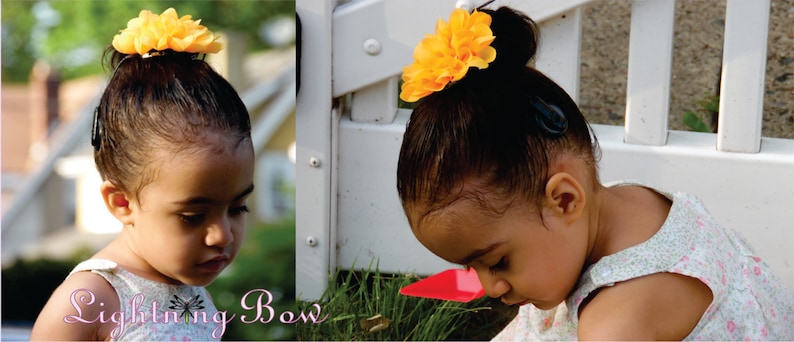
So, I haven't done any research on this, but I'm just wondering...should we be putting children's cochlear implant receivers on the back of the head?  On top of the head? Together?

Natural hearing occurs bilaterally, on the sides of our head.  This allows for rapid transmission of information to the brain.  It also allows for sound localization, which is the ability to identify the direction and distance of a sound's origin.  So what happens when the two cochlear implant processors are together?  What happens when they are placed in an unnatural location?  

I DON'T KNOW!!!

So, should we be marketing cute little products that promote placing cochlear implant receivers in unnatural locations and together?  I obviously see the benefits of helping to keep them in place on young children, but other more appropriate options seem to be readily available.  

Fashion over function????


Valentine’s Barrier Activity

  This is a great and challenging activity for upper elementary students and even middle school students as well.  I give each student a bla...