@heatherspeakandsign

@heatherspeakandsign

Thursday, November 21, 2024

ASL Fingerspelling: Thanksgiving I Have...Who Has Game


Last month I shared an ASL fingerspelling, Halloween-themed "I Have...Who Has?" game that I downloaded on Teachers Pay Teachers.  My students loved it so much that they asked me if I had one for Thanksgiving.  I looked and none were available.  So, I created my own.  I made the cards much bigger so that the fingerspelling font is easier to read.  My game has 14 cards from start to finish.  I definitely need to work on my formatting, but I am very happy with the final product and can't wait to play it this week and next with my students.  It targets thematic vocabulary in both ASL and spoken English, along with expressive and receptive fingerspelling (which I always need to practice).  


Monday, November 18, 2024

Alphabet Puzzle - Auditory and Early Reading Skill Development


Alphabet letters are an instant closed set of minimal pairs, perfect for targeting auditory skill development.  The letters B, C, D, E, G, P, T, V, and Z are one set of minimal pairs.  A, H, J, and K are another set.  F, L, M, N, S, and X for yet another set.  You can readily target discrimination and identification using letters.  By using words, you can also target auditory memory and sequencing.  I have a set of CVC (consonant-vowel-consonant) words with pictures that I downloaded.  I have two foam letter alphabet puzzles, one uppercase and one lowercase, that I picked up at a dollar store.  The student and I typically pop all the letters out onto the table but keep them in alphabetical order.  I then put three post-its on the table in front of the student labeled "1", "2", and "3".  Next, I present the three letters that make up the target word from behind my acoustic hoop.  Once the student has identified the letters and placed them on the post-its in the correct order, we practice tapping out and blending the sounds to read the word.  This may take several presentations and possibly the addition of sign language.  All good data to keep.  If the student is not able to successfully tap or blend, I model it.  Once the word has been stated, I ask the student to sign it if they can so I can check for comprehension.     


Wednesday, November 13, 2024

Formulating Questions: Thanksgiving...Guess Who? Guess What?


Formulating questions using appropriate English grammar is extremely challenging for my students with hearing loss.  My students often omit the auxiliary or use the incorrect form when asking questions (ex. "You have?" vs. "Do you have", do/does/did).  They also struggle with word order, most often leaving words in statement order and using rising intonation (ex. "It is..." vs. "Is it?").  Playing games like "Guess Who" are great for practicing question formation.  Even better, you can work on pronouns (he/she) and verb agreement (has/have).  If you watch the video you will see I use signed English rather than ASL.  This is done to visually highlight the grammar, function words, and word order.  

This Thanksgiving version of "Guess Who" and "Guess What", created by K Ratliff, are available on Teachers Pay Teachers for free download.  They are available for a variety of holidays and season.  These holiday and seasonal versions are a fun, motivating way to practice question formation, pronoun use, and verb agreement while also targeting relevant vocabulary.  I try to encourage the students to think categorically or look for similarities so that they can eliminate more than one picture at a time.  I have the students use Bingo markers to cover up the pictures that they have eliminated.   

This activity is also great for working on auditory skill development with students that are Deaf and Hard of Hearing.  It has a closed visual set to support listening, while targeting sentence level discrimination and comprehension.  


Tuesday, November 12, 2024

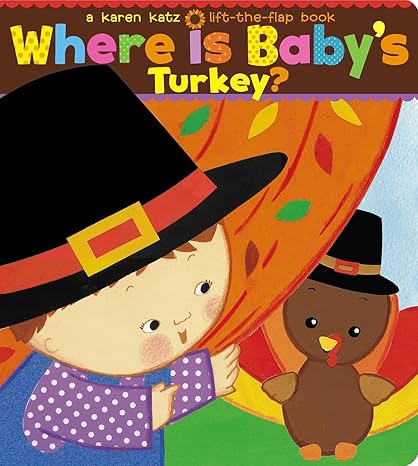
Where is Baby's Turkey?


Yep...there's another one!!! "Where is Baby's Turkey?" from the Karen Katz lift-the-flap series is another book I like to read this time of year in therapy sessions.  Lift-the-flap books continue to be one of my favorite ways to engage with preschoolers, target vocabulary, and elicit communication.  I hold them out of reach so the students need to make a request to see/look.  This particular Karen Katz series is great for working on seasonal and holiday vocabulary as well as location words (in, under, behind, etc.).  We fold in some core language as well, including want, turn, my/your/I, see, open, and more, and target expanding utterances to request (ex. I want see/look, behind the gate).  It is highly relatable, simple, predictable, and visually appealing.  


Thursday, November 7, 2024

Thanksgiving Penny Pushers


This is a repost of information I shared in "Back to School - Penny Pushers".

Penny Pushers are another favorite activity I use for receptive language (any student) and auditory skill development (Deaf and Hard of hearing students).  Depending on the language level of the students, I typically use this with Knd-2nd graders, but have had older students for whom this was still very appropriate.  This activity was created by K Ratliff and is available for free download on Teachers Pay Teachers.  Penny Pushers are available for all four seasons and a variety of holidays as well.  Each set comes with around eight different stories that are approximately 3-5 sentences in length, so the activity is quick and repeatable within and across therapy sessions. 

I start by giving each student participating a laminated copy of the response chart.  I then give each child four pennies.  While the students often want to put them on the penny illustrations at the top, I find it more helpful to place them on the "wh" question words along the side.  This is a better visual representation of one per row.  If I am working with more than one student, I put up some kind of visual barrier so that they can't see each other's responses.  I tell them that I want everyone to do their own thinking.  Before I read/sign the story, we typically go over the possible response options for each row to make sure they understand the targeted vocabulary.  The "when" row usually needs the most attention, particularly for students who are not yet reading words at that level (Thursday, November, etc.).  

Once we've established that the students understand the possible response options, it's time to read and/or sign the story.  I always remind them that the rule is not to do anything but listen/watch until I say, "Slide your pennies!"  If I am targeting auditory comprehension with my Deaf and Hard of Hearing students, then the first 1-2 presentations will be using my acoustic hoop so that it is a true listening task or present it orally without sign support.  While this is a challenging listening task, having the pictures for support aids in word discrimination and identification.  If I notice that one of my Deaf/HoH students has only 1-2/4 correct, then I will reread the story with sign support to ensure comprehension regardless of mode.  After the story has been presented, we go over the correct answers, with each child getting a chance to go first for at least one question.  Some children choose to share how they did, but the barriers allow for each student's performance to remain private.  For the "who" row, I often ask them how they knew it was a boy/man vs. girl/woman vs. more than one person so we can highlight the pronouns used within the story (she/her/hers, he/him/his, they/them/their).  And, of course, if everyone gets 4/4 then we all stand up and do a "winners dance"!!!       


Tuesday, November 5, 2024

Thanksgiving Songs


"Thank You Song" (tune of "Twinkle, Twinkle, Little Star")

Thank you for the sun so bright.
Thank you for the moon at night.
Thank you for my family.
Thanks for friends who play with me.
Thanks for everything I see.
I am thankful, yes sirree!


"Hello Mr. Turkey!" (tune of "If You're Happy and You Know It")

Hello, Mr. Turkey, how are you? (clap, clap)
With a gobble, gobble, gobble and a wobble, wobble, wobble.
Hello, Mr. Turkey, how are you? (clap, clap)

"I'm Glad I'm Not a Turkey" (tune of "Did You Ever See a Lassie?")

Oh, I'm glad I'm not a turkey, a turkey, a turkey.
I'm glad I'm not a turkey on Thanksgiving Day.
They stuff you and bake you,
And then they will taste you.
Oh, I'm glad I'm not a turkey on Thanksgiving Day!


"Gobble, Gobble" (tune of Military Chant)

Gobble, gobble is the sound (repeat)
Of the turkey fat and round (repeat)
Thanksgiving Day will soon be here (repeat)
Then he'll surely disappear (repeat)
Sound off...1, 2
Sound off...3,4
Bring it on down....4,3,2,1...Gobble! Gobble!


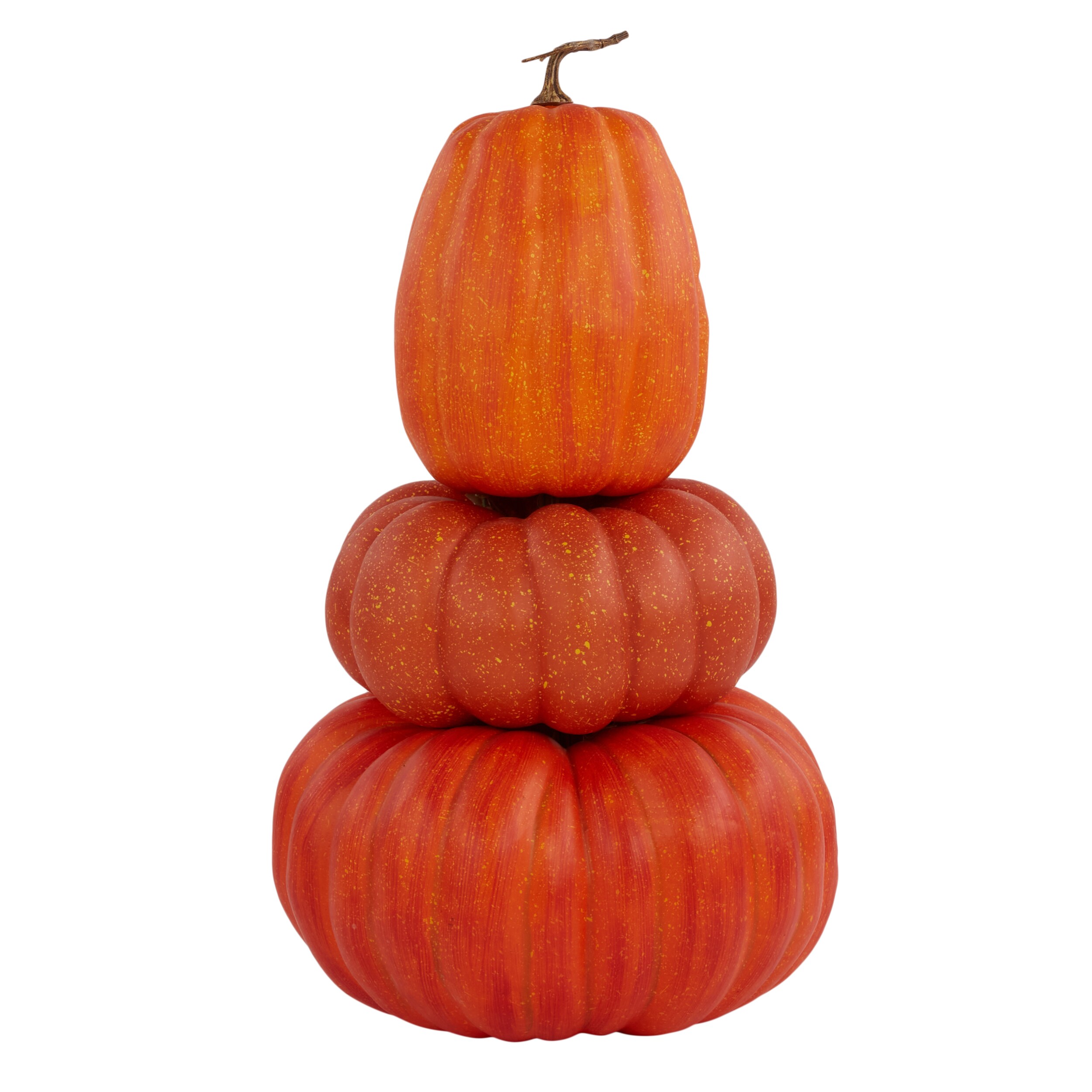
Three Pumpkins Identifying Similarities Extension Activity


This was a free activity I downloaded targeting categorization/identifying similarities.  I like to use it in small group therapy with 2-3 students.  To target auditory memory and sequencing, I state the three items on the card  and have the first student repeat them back in correct order.  For my Deaf and Hard of Hearing students working on auditory skill development (discrimination/identification/comprehension), I will present the words using from behind my acoustic hoop.  If there are three students in the group, I then have the second student identify how the three items are related/similar.  The third student is then asked to name an additional item that could fit into the category.  If there are only two students in the group then I combine the first two "jobs".  If you have four students, I make the fourth student the "judge" who decides if all responses were accurate.  Involving all the students in the group in each turn, promotes everyone paying attention and remaining engaged not only when I am talking/signing, but also when peers are as well.    


Wednesday, October 30, 2024

Switch the Witch Game

  
Switch the Witch is another game created by David Sindrey.  Much like his other game I featured, "Halloween Meanies," I love using it because of the ability to choose whatever target I want to while playing it.  You can target articulation, expressive vocabulary, auditory discrimination, receptive understanding of verbal descriptions, answering questions, or practicing grammar targets.  The ability to vary targeted skills makes this game very repeatable without the students losing interest.  You do need at least two players, and I think it works best with three (even if you are the third player).  You need 16 picture cards to represent your targeted skill(s).  You then hide the "witch faces" and "magic wands" under the picture cards.  I like to use paper clips so that I can pick them up without revealing what's underneath.  Before you start the game you have the students select which mouth, nose, and hat to put on the "Witch of the Year" poster to start the game.  To play the game students take turns picking a picture card.  After practicing their speech or making a sentence (whatever you have decided is the targeted skill), they slide the witch face or wand from behind.  If they get a witch face they hold onto it until the end of the game.  If they get a magic wand, then they "Switch the Witch" and can change one part of the witch pictured on the poster (mouth, nose, or hat).  There is some strategy to this game, as students need to realize they should change the part that will help them win.  At the end of the game, when all the picture cards have been played, whoever has the witch face that matches the witch on the poster wins the game. 


Tuesday, October 29, 2024

Making Play Dough and Friendly Sabotage

The recipe I like best:
2 Cups flour
1 Cup Salt
2 Tbsp. Cream of Tartar
2 Tbsp. Vegetable Oil
2 Cups Water
Food coloring
Cook in electric frying pan

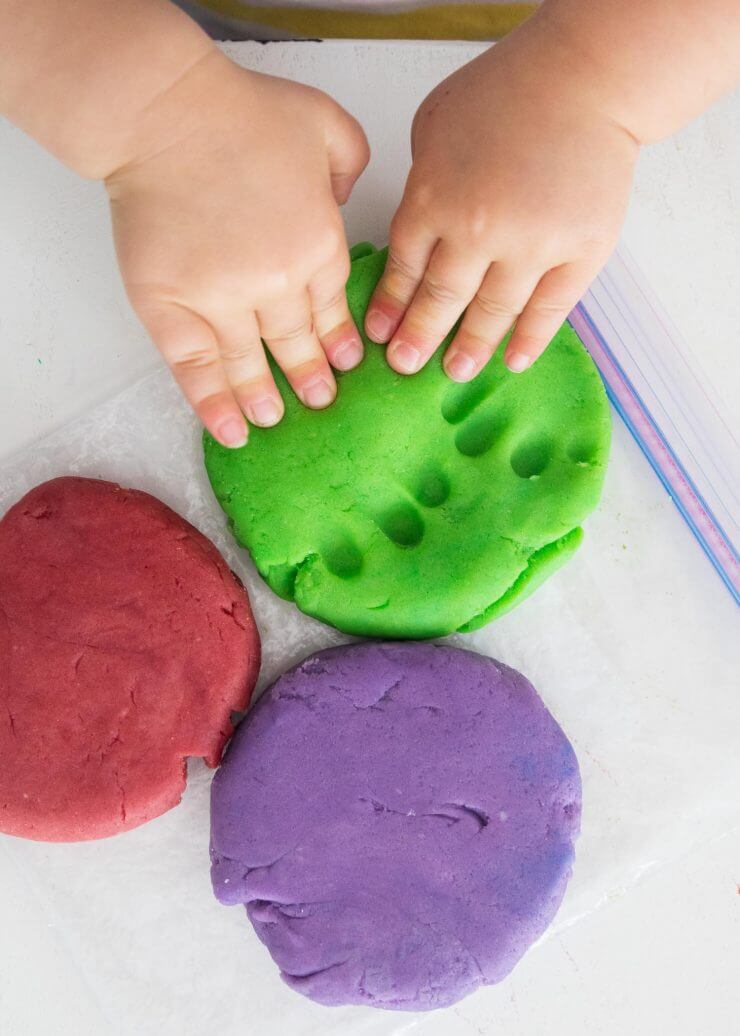
Making playdough with the preschool classroom is one of my favorite activities.  We often do it once a month.  It is easy to involve the students and at the end they have something fun to use in their classroom during centers.  Most often I make the color that matches the season or holiday.  This month it was "orange" like a pumpkin.  When making the playdough a secondary color I like to pretend I don't have that color food coloring.  Then we mix two primary colors to "see what happens".  

This activity is great for eliciting core language as well as language in general, but the key is friendly sabotage.  When a child comes up to the table where the pan and ingredients are waiting, I will greet them and then just stare and wait.  I'm looking for that student to use a word or sign (or more) to ask for what they need (ex. Cup, spoon, I want, flour, my turn, etc.).  Once the student has the cup/spoon and asks me to "pour" the ingredient, I do so with the bag closed or cap on so that nothing comes out.  I'm trying to elicit a request to "open".  Once we have opened the ingredient and the student then again requests that I "pour", I will ask "where" and then proceed to pretend to pour it on the floor or on their head.  I'm hoping to elicit "in", "in the cup", or "in the spoon".  My other sabotage technique is to say I forgot to bring the water and have the students try to problem solve where we can get some.  There is a sink in the classroom, and my hope is they will tell me to get it there.  This is a much needed opportunity to practice the vocabulary word of "sink" as most of my students will call it some variation of "wash hands".  Throughout the pouring of ingredients we talk about empty/full and I have the students tell me when to "stop" pouring.  I always involve the students in counting the drops of food coloring as I add them.  Word of advice, if you are mixing anything with yellow (blue/yellow, red/yellow), I recommend doubling the yellow in comparison to the other color.  For a little extra fun, sometimes I add an extract to give it a scent as well.  It is best to store the playdough, once it's cooled, in a gallon plastic bag.    


Wednesday, October 23, 2024

ASL Halloween I Have...Who Has Game


Even though I use sign language expressively and receptively on a daily basis, I still struggle with fingerspelling, particularly receptive fingerspelling.  This Halloween-themed "I Have...Who Has?" game, available for free download on Teachers Pay Teachers, is a great way to practice both expressive and receptive ASL fingerspelling.  Knowing the theme gives a context to help aid understanding. I would suggest that if you download this game for use that you enlarge the cards before cutting and laminating.  The printed letter signs are a bit small and can be difficult to see subtle differences.         


Tuesday, October 22, 2024

Fall Scene Barrier Activity - Predetermined Targets/Outcomes


I use barrier activities so often in my therapy.  They are a great way to target auditory skill development for students with cochlear implants or hearing aids.  But they are also perfect for working on receptive and expressive language (vocabulary and grammar), giving and following directions, and basic concept development for any student on your caseload.  Often times, however, the students get so caught up on what they want to say when it's their turn that they aren't able to be clear and concise.  Their peers lose interest while they formulate their thoughts.  Also, students tend to use simple, less complex directions and make very standard choices (ex. sun yellow, apple red).  By giving the students a completed picture, I can control the complexity and help eliminate some of the prior issues described.  In addition, by giving each student the same picture colored differently, they have a closed set to refer to when listening to their peer.  They also have a blueprint for the expectations.  


I use game boxes to create barriers between the students.  It's important to use ones that are tall enough to block visual access to the students' papers but not to block visual and auditory access to their peers' mouths when talking or hands when signing.  If it's a true auditory/listening activity using the acoustic hoop, then you just want to make sure there aren't barriers to sound waves traveling through the air from speaker to listener.  To increase the complexity of the activity, you can target multi-step directions (ex. "Color the leaf in the basket yellow and color the wagon handle blue.").  I typically wait to see what the receiving student understood/remembered before offering assistance.  This type of activity has built in opportunities for practicing communication breakdown repair.  In the end, even when a direction has been successfully understood, I like to repeat it myself so I can model the appropriate word order, usage, and grammar.  
 

Sunday, October 20, 2024

Halloween Rhyming I Have...Who Has Game


While the cochlear implant and other advances in hearing technology have made learning to read using a sound-based approach more achievable, both phonological and phonemic awareness can be very challenging for students with hearing loss, even with amplification.  That said, it isn't the same for these students as students with normal hearing and shouldn't be treated that way.  This blog post is not to get into the nitty gritty of teaching reading and literacy to Deaf and Hard of Hearing students.  I do, however, want to highlight one of the skills that I observe to be challenging pretty consistently for most of my students...and that is rhyming.  I've noticed some correlations over the years, none of which should surprise anyone.  My students that are reading on grade level are typically better at rhyming.  My students that have age-appropriate (or pretty close) speech articulation skills are also better at rhyming.  These students are the ones that can generate rhyming words regardless of spelling patterns (ex. hairy/scary, rolled/cold).  Another pattern I have noted is that many of my students, when asked to generate a rhyme to a target word, will change the end of the word instead of the beginning (ex. cat/car/cab).  For my students that are really struggling with rhyme, they more often name a semantically-related word (ex. cat/dog).  I do my best to help them visually see rhyme, using word families (ex. sat/cat/hat/mat), but to "hear" rhyme you need really good access.  My students with cochlear implants and those with unilateral loss definitely fair better than my students with bilateral hearing aids.  However, many of my students with early access to sound through cochlear implants struggle in this area.

This Halloween-themed "I Have...Who Has" game using rhyming words is a fun way to target and practice rhyming.  It is available for free download on Teachers Pay Teachers.  It is also great for working on auditory skill development, listening to both adult and peer spoken English.  This is a particularly challenging game for targeting listening skills because the targets are single words without context or a closed set, in essence open set identification.  When we play this game in therapy, once a card is read aloud it is laid down on the table.  This allows everyone to see the the written word and use the spelling patterns to help find the rhyming word.  Some of the words in this game are also great for a quick vocabulary lesson (handy, thud, grave, motion, potion, gloom, cones, goon).  


Wednesday, October 16, 2024

Halloween Meanies Game


This time of year one of my students' favorite games to play in therapy is "Halloween Meanies".  This game was created by David Sindrey and is available on speechtree.ca for download.  Halloween Meanies  One of the reasons I love using it is the ability to choose whatever target I want to while playing it.  You can target articulation, expressive vocabulary, auditory discrimination, receptive understanding of verbal descriptions, answering questions, or practicing grammar targets.  The ability to vary targeted skills makes this game very repeatable without the students losing interest.  You just need 16 picture cards to represent your targeted skill(s).  You then hide the "meanies" and "candy bags" under the picture cards.  I like to use paper clips so that I can pick them up without revealing what's underneath.  The other reason I really love this game is, like many of David Sindrey's games, it's a cooperative game of luck.  The students either win together or lose together, so there are no hard feelings.  

To use this game to target auditory skill development, you simply need to add the use of the auditory hoop and careful selection of your 16 targets.  For example, you might choose words differing by presence or absence of a word final consonant (boo-boot, bye-bike-bite, bow-boat, etc.) or presence or absence of plural -s (black cat/black cats, pumpkin/pumpkins, etc.).  At a lower level, you might target words differing by syllable number (witch vs. pumpkin vs. Frankenstein vs. Jack-o-lantern).  Or at a higher level, you might target sentence level discrimination (She is trick-or-treating vs. He is trick-or-treating, He is picking a pumpkin vs. He is carving a pumpkin.).  The only downfall to make this a listening activity is that you as the clinician are choosing what pictures get looked under, so make sure you have no idea where you have hidden the meanies and the candy bags.


Tuesday, October 15, 2024

Jack O' Lantern Songs


"Jack O' Lantern" song (sung to the tune of "Daniel Boone")

Born in a pumpkin patch in my backyard.
Where Mr. Scarecrow stands on guard.
Born in a patch, where he knew every weed.
Before he was a pumpkin, he was a pumpkin seed.
Jack O'
Jack O' Lantern,
King on Halloween Night!


"Jack O' Lantern" song (sung to the tune of "Mary Had a Little Lamb")

Jack O' Lantern smiling bright,
Smiling bright, smiling bright.
Witches flying in the night.
It is Halloween!

Ghosts and goblins, cats and bats,
Cats and bats, cats and bats.
  Witches with their funny hats.
It is Halloween!


Where is Baby's Pumpkin?


Another book I like to read this time of year in therapy sessions is "Where is Baby's Pumpkin?" from the Karen Katz lift-the-flap series.  It is highly relatable, simple, predictable, and visually and tactilely appealing.  It uses Halloween-themed vocabulary and embeds spatial concepts (in, behind, under, etc.).  Depending on the student(s), you can elicit various levels of language to make a request from the child to see what is behind the flaps (ex. See, I want to see, I want to look under the bed).    


Thursday, October 10, 2024

BUMP (Context Clues and Idioms) Halloween!


This game is available free for download on Teachers Pay Teachers.  It was created by Games 4 Gains.  While it is intended for grades 3rd-6th, I have found it to be best for my 5th-9th graders.  
 

Two of the things my students find most challenging, particularly my Deaf and Hard of Hearing students, is using context clues to determine the meaning of unfamiliar vocabulary and idioms.  Figurative language in general is very challenging.  This game is a fun and motivating way to practice these skills.  And because it's a turn-taking activity, each target vocabulary word or idiom is likely to get multiple repetitions and therefore become more meaningful and more likely to be remembered.  


Tuesday, October 8, 2024

"On Halloween" song


One of my students' favorite songs this time of year is "On Halloween" sung to the tune of "Wheels on the Bus".  I printed and laminated a picture of a haunted house and added velcro all around it.  I then printed out the pictures of the ten things we might sing about, laminated, and added velcro to them as well.  I typically use this in my large group/whole class lesson in preschool but have done it in therapy with just 1-2 students at a time as well.  Typically I do it in the smaller setting to pre-teach it so that they are more successful participating in the whole class activity.  This type of interactive song allows for turn-taking and for the students to make choices as to what they want to sign about.  I did not write this song.  I found it on the internet a number of years ago, but have not been able to find the exact same one again to give proper credit to the creator.  


Possible verses include:

The cat in the house says
"Hiss! Hiss! Hiss!"  
"Hiss! Hiss! Hiss!"  
"Hiss! Hiss! Hiss!"  
The cat in the house says "Hiss! Hiss! Hiss!"  
On Halloween.

The owl in the house says
"Whoo! Whoo! Whoo!"

The scarecrow in the house says
"Shoo! Shoo! Shoo!"

The mummy in the house says
"Mmmm.  Mmmm. Mmmm."

The spider in the house says
"Spin! Spin! Spin!"

The ghost in the house says
"Boo! Boo! Boo!"

The bat in the house says
"EEK! EEK! EEK!"

The witch in the house says
"Heh.  Heh.  Heh."

The monster in the house says 
"GRRR. GRRR. GRRR."

The kids in the house say
"Trick or Treat! Trick or Treat! Trick or Treat!"

Monday, October 7, 2024

Boo Who?


I LOVE Halloween!!!  And I love using lift-the-flap books in speech/language therapy.  This book is a great way to combine these loves.  For some students I will simply read this book and have them guess what is behind each flap.  However, for many of my students with limited language and expressive vocabulary (in any mode - spoken or signed), it is very difficult to "guess".  So, I have created a set of laminated picture options that I place on the table in front of the student.  I, of course, label these pictures in speech and sign as I put them down.  This allows my students a closed set of possible responses and gives them the opportunity to guess without having to speak or sign.  

To make this book a listening activity targeting auditory skill development, I read the pages behind my acoustic hoop.  Having the pictures to choose from helps them map meaning onto the language they are "hearing". 

As always, lift-the-flap books allow you to elicit core language as you hold the book out of the student's reach until they use their communication skills to request (ex. see or look, I want to see, open, more, my turn, etc.).    

Wednesday, October 2, 2024

Auditory Skill Development, Concept Development, Fall Vocabulary


Using simple pictures from the internet that I printed in three different sizes and laminated, I like to target auditory skill development, expressive and receptive vocabulary, and early basic size concepts using the crowd-pleasing "mailbox toy."  In the fall we mail big, medium, and small pictures of pumpkins, apples, leaves, and acorns.  By pairing the size with the object you are targeting listening for two critical elements.  I make and use two full sets of the pictures so that the students also take a turn to tell what to mail.  This gives them the opportunity to practice the target vocabulary as well as combining two words/signs.  As always, I pair the utterances with ASL as needed to ensure success and comprehension. It's important to also use synonyms like large and little to further develop the students' vocabulary and to add to the listening challenge. 


Tuesday, October 1, 2024

Songs, Music, and Movement (song added 10/29)


 I try to get into our preschool classroom once a week to lead a group activity.  Most often we end our time together with songs.  Music and movement is a great way to integrate and teach theme-based vocabulary, both spoken and signed.  Singing songs without musical backup allows me to control the speed and emphasize key words.  All of the songs we sing are ones I have found throughout the years on the internet.  I did not write any of them.  I have, however, added sign language and occasionally some props.  For each song I have printed out the words and placed them on index cards.  I then print out a related picture and put it on the other side of the cards.  This allows me to lay out the choices and allow students the opportunity to select what they want to sing.  

Fall Songs:

"Apple Tree" (sung to the tune of Twinkle, Twinkle)
Apple, apple, tree so tall,
I can hardly wait for fall.
When your apples I will pick,
Fill my basket, eat them quick.
Apple, apple, tree so tall,
I can hardly wait for fall.


"Leaves are Falling" (sung to the tune of Frere Jacques)
Leaves are falling, leaves are falling.
Falling down, on the ground.
Red and orange and yellow.
Green and brown.
Green and brown.

10/29/24

"Fall is the Season" (tune of "Happy and You Know It")
It is fall and it's time to rake the leaves.
It is fall, that's the season.
We don't need a better reason.
It is fall and it's time to rake the leaves.

(ride a bike, pick the apples, carve a pumpkin, jump in leaves, etc.)

I have different versions of this song for each of the seasons.  You simply change the one word in the lyrics and change the activities.  This song is great for adding movement for the students while highlighting vocabulary.  While I typically have approximately four activities in mind to sing about and act out, I will ask the students for ideas/suggestions as well.  

Monday, September 30, 2024

Mini-Motors for 1-3 Critical Elements


 Mini-Motors Amazon


These manipulatives, which are marketed for preschool counting and sorting, are great for targeting auditory skill development as well as expressive and receptive language skills and early concepts.  There are six different vehicles in six different colors.  This closed set allows for fun lessons that can target 1-2 critical elements during listening activities.  To target one critical element you would use either all six vehicles in the same color (ex. blue car, blue school bus, blue airplane, blue train, blue boat, blue firetruck) or the same vehicle in all six colors (ex. red boat, blue boat, green boat, yellow boat, orange boat, purple boat).  By adding all the different vehicle types as well as all the colors you can really up the ante and target two critical elements.  For an extra challenge, and to eliminate some of the "clues", you can control the set to only have one syllable colors and vehicles (ex. red boat, blue train, green car) or only multisyllabic items (ex. yellow airplane, purple school bus, orange firetruck).  If you want to continue to up the ante and target three critical elements, you can use a child-friendly printed town map or playmat rug as pictured below (ex. Drive the blue school bus to the farm.  Drive the red firetruck to the police station.).


As always, I will add sign language support to aid and ensure comprehension and success.  I also often use pictures to support the lesson, for children who do not yet have all of the colors, vehicles and locations in their receptive vocabulary.  


Wednesday, September 25, 2024

Baby Loves Fall!


Lift-the-flap books continue to be one of my favorite ways to engage with preschoolers, target vocabulary, and elicit communication.  I hold them out of reach so the students need to make a request to see/look.  This particular Karen Katz series is great for working on seasonal and holiday vocabulary as well as location words (in, under, behind, etc.).  We fold in some core language as well, including want, turn, my/your/I, see, open, and more.  

Tuesday, September 24, 2024

Four Weeks Post Cochlear Implant Activation


So, at four weeks post activation there are not any substantial changes.  I have continued to practice the Ling sounds at the beginning of each therapy session.  While my student still needs to see my lips or my signs to choose the correct corresponding picture ("mmm" - eating ice cream, "oo" - train, etc.), I've noticed that her vocalizations in response to mine are starting to more closely resemble what I'm producing.  In particular, my student is making close approximations for "oo" and "ah".  My student is also shaping production of "ow" when repeating/copying "out" during activities using my small, velvet bag.  At this time, I don't feel confident that my student is detecting "sh" or "ss".  We have also  continued to repeat known routines, such as Bingo paint dabbers and "Critter Clinic", focusing on the repetitive words/phrases (open, turn-turn-turn, 1-2-3...Stop, out, bye-bye).  We have continued to work on learning the names of all the classmates and teachers.  These can't really be used for auditory training purposes yet, because my student is still learning them.  I introduced my "knock-knock" board this week and used it to practice names, placing the individual student/staff pictures behind each of the nine doors.  We will again build a routine with this activity (knock-knock-knock, open, who, bye-bye) and reuse it throughout the year with other target vocabulary.  All of my preschool students have also worked on sorting the pictures by boy vs. girl and teacher vs. student.  In the next two weeks, I'd like to focus in on discrimination by syllable number.  My student has a limited receptive/expressive vocabulary, so I will probably use colors (ex. yellow vs. blue, purple vs. green, orange vs. red) as well as names of classmates, particularly one- vs. three-syllables names.       

Monday, September 23, 2024

Sneaky, Snacky, Squirrel Game


My students absolutely LOVE this game.  Even my older students still ask for it.  I'm going to bring it over to the middle school this week.  Because it's so motivating, I use it for practice/drill based activities.  If the students are working on producing /s/-blends at the word level, then they practice that before they get to take their turn.  If they are practicing word final consonants at the sentence level, they practice that before they get to spin the spinner.  You can target verb phrases/tenses, pronoun use, vocabulary...honestly anything.  You just build it into each students' turn in the game.  For the younger students it's also great for targeting colors and understanding "1" vs. "2".  For young students, or any students with fine motor challenges, this game is great for working on that as well.  In order to use the squirrel to pick up the acorns and place them in the tree stumps, they need to squeeze, hold, and release.  Even spinning the spinner and isolating that index finger is a great skill to practice and develop.  

Across the board, everyone's favorite part is when the spinner lands on the "sneaky squirrel" and they get to steal from another player.  I often play the game with the students so that they can steal from me.  I can model being a good sport about it and help ward off some of the meltdowns for students that can't quite handle having their acorn stolen.


Tuesday, September 17, 2024

I Have...Who Has?


I Have...Who Has? 

Now I know you all already know about this game.  It is a quick, fun activity when you have a small group for therapy.  There are so many versions of this game, readily available to print and use, that you can target almost anything...articulation, vocabulary, or grammar.  That said, "I Have...Who Has?" is also great for targeting and working on auditory skill development and communication repair with students that are Deaf and Hard of Hearing.  

This game provides you with a closed set already framed in a predictable, repeated carrier phrase ("I have _____.  Who has _____?).  Depending on what game you choose to use, for example fall vocabulary vs. minimal pair /s/-blends , you can use maximally contrasting words (leaf vs. apple picking) or up the ante of the listening complexity (sand/stand).  Another bonus, you get to repeatedly target the expressive use of have vs. has, which tends to be very challenging for Deaf/HoH students.  

In addition, many of my students are much more successful understanding me, with my clear, well articulated, adult "teacher" voice, but struggle to understand their peers.  This game forces that interaction and allows for natural practice of communication breakdown repair.  Of course, if and when sign language is needed to ensure comprehension and success, I am going to add that in.  


Monday, September 16, 2024

Smashmats as an Auditory/Listening Activity


So many of you are probably already using smashmats in therapy.  They are great for targeting speech articulation or theme-based vocabulary (expressive and receptive).  But have you ever thought of using them for auditory skill development with your Deaf and Hard of Hearing students?  

If your students have listening goals targeting discrimination, identification, and comprehension, smashmats are a fun and motivating way to work on them.  All you really need to do differently is add the use of the acoustic hoop.  The smashmats developed for articulation are often the best for targeting discrimination.  They typically contain sets of pictures that are very similar in terms of their consonants, vowels, and syllable structures.  Consider the image on the top right of this post (hat, hot, cat, bat).  When using the theme-based vocabulary smashmats, such as the one on the top left of this post, the words are very different in structure.  However, they are still great for working on identification through listening alone.  You can embed the words in a carrier phrase or sentence to add to the complexity of the listening task (ex. Find the ____ and smash it!).  

If I am working with two students at the same time, I will provide each with their own mat and then put a barrier in between them so that everyone does their own listening.  When I am working with only one student, I often will give myself a mat.  This allows it to become a turn-taking activity.  In addition, we are now targeting both listening (my turn) and expressive language (spoken or signed) and/or speech articulation (their turn).  Another tip...for some of the younger students, or students with additional challenges, I keep all the play dough balls out of their reach and give them one at a time.     


Using smashmats like the ones above, you can also target sentence comprehension.  Depending how you formulate the sentences, you can have up to three critical elements (ex. She has a pink flashlight. vs. He has a blue flashlight. vs. They have a blue cooler.).  If you have a mat yourself, now you're targeting listening, vocabulary, and grammar!!!    


Valentine’s Barrier Activity

  This is a great and challenging activity for upper elementary students and even middle school students as well.  I give each student a bla...